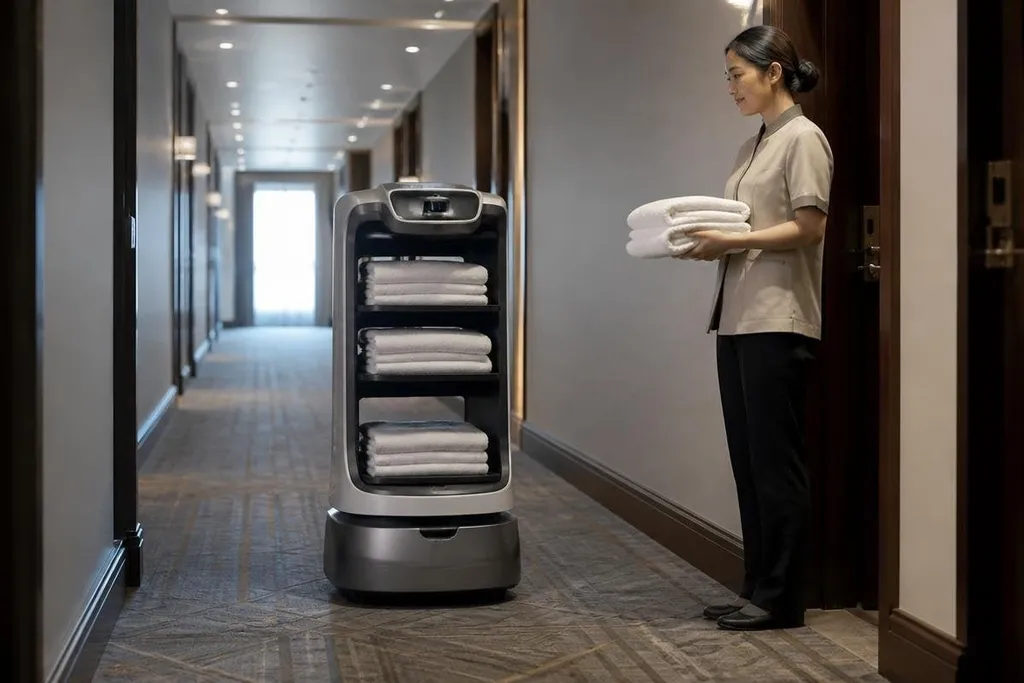
A hotel robot can carry towels, guide guests to a room, or move food from a kitchen to a pickup point. The service gain comes when staff spend less time walking and more time handling requests that need judgment, care, or a human answer.
- Delivery robots can move items through public corridors without asking a staff member to make each trip.
- Indoor maps, cameras, and obstacle sensors help a robot reach a set destination.
- Guests still need a clear way to reach a person when a request falls outside the robot’s job.
Start with the work, not the robot
Hospitality managers should begin with a repeated task that takes staff away from guests. A robot may carry extra towels to a room floor, move used dishes to a collection point, or guide visitors from a lobby to a meeting room.
Each job has a clear start and finish. That makes it easier to set the robot’s route, check whether it completed the task, and see where a person still needs to step in. A vague goal such as “better service” gives a pilot no useful test.
The task also needs enough repetition to matter. If a robot makes one trip each hour, it may add another device for staff to watch without freeing much time.
A busy breakfast period or a hotel with long corridors gives the case a clearer shape, but the site still needs to check traffic, stairs, doors, and lift access.
How the machine works in a hotel
A service robot uses sensors to detect people, walls, carts, and other objects. Its indoor map gives it a planned route, while its control software changes that route when a guest blocks the corridor.
That route only works if the building supports it. Automatic doors may need a connection to the robot, lifts may need a control link, and floor surfaces must let the wheels keep contact. A robot that reaches the lift but cannot call it has completed a map task, not a hotel task.
The handoff matters too. A room delivery may need a code, a phone alert, or a staff member at the destination. The hotel must decide who checks the item, what happens when nobody answers, and how the robot returns to its charging point.
The handoff rules need a record beyond the maker’s product sheet. A hotel manager can use hospitality robotics reporting to compare delivery routes, guest alerts, staff checks, and charging rules before setting a pilot’s pass-or-fail test.
Where customer service gets better
Routine transport is the clearest use. Staff can send a robot with bottled water or fresh linen while they stay at the front desk. That reduces the time a guest waits for a person to return, provided the robot can move through the building without repeated stops.
Robots can also give directions. A lobby unit with a screen can show a guest the route to a room, restaurant, or conference space, then guide them through the building. This works best for fixed destinations and common questions. It won't replace a receptionist who needs to solve a booking problem or calm an upset guest.
The machine can create a service record as it works. A task request can show when a delivery started, when the robot reached the floor, and when someone collected the item. That record helps a manager find delays instead of relying on memory at the end of a shift.
Where the plan can fail
Guests may stop in front of the robot, children may touch it, and bags may block its route. A staff member still needs a way to pause the machine, remove an obstruction, or take over the task.
Privacy needs a clear rule. Cameras used for movement and safety may see guests, room doors, or staff areas. The hotel should state what the robot records, how long it keeps that data, and who can view it.
The service can also feel worse if the robot creates extra work. Staff may need to refill its storage space, clear its route, answer alerts, and fix failed deliveries. I'd skip a pilot that measures robot trips but never measures staff time saved or guest wait time.
A practical pilot checklist
Use these checks before buying or leasing a unit:
- Pick one repeated task with a clear start and finish.
- Map doors, lifts, stairs, corridors, charging points, and busy areas.
- Set a human takeover process for blocked routes and failed handoffs.
- Record staff time, guest wait time, completed tasks, and repeat trips.
- Tell guests what the robot does and how to reach a person.
- Set a review date before the pilot begins.
The first useful result is not the number of robot trips. It is the change in staff time and guest waiting during the chosen task. If those numbers do not improve after the route and handoff are fixed, the hotel has found a poor fit rather than a service problem that needs another robot.